The Rose Path
The body is not separate from the sacred.
It is where devotion becomes real.
The Rose Path is the name I give to the devotional thread running through my life and work.
It is not a doctrine. It is not a demand to believe what I believe.
It is a way of listening.
A way of meeting the body, the heart, desire, boundaries, love, grief, and truth as parts of the same human experience.
The Symbol
Beauty with roots. Softness with boundaries.
For me, the Rose is a living symbol.
Its petals speak of tenderness. Its thorns speak of protection. Its roots speak of belonging to the Earth.
The Rose opens slowly. It does not tear itself apart to be received.
It teaches me that softness is not self-abandonment. That beauty does not require performance. That devotion can remain embodied, discerning, and whole.
Tenderness
The capacity to remain open without forcing.
Boundary
The wisdom that protects what is sacred.
Embodiment
The return to the body, the Earth, and what is real.
Devotion
The unfolding that becomes possible when safety and truth are present.
The Lineage
A lineage of symbols, devotion, and embodied practice.
I use the words Rose Lineage to describe the spiritual and symbolic tradition that informs my personal practice.
For me, it carries themes of love, devotion, embodiment, sacred union, feminine wisdom, and the remembrance of the body as worthy.
It is connected in my path with Mary Magdalene and Isis. Not as distant figures to worship. As symbols and spiritual presences that invite me into deeper honesty, devotion, courage, tenderness, and embodied love.
The historical origins of modern Rose Lineage teachings are interpreted differently across spiritual communities.
This page presents my personal relationship with the tradition. It does not claim to offer a definitive historical account.
Mary Magdalene
Devotion made embodied.
A woman remembered through love, courage, and presence.
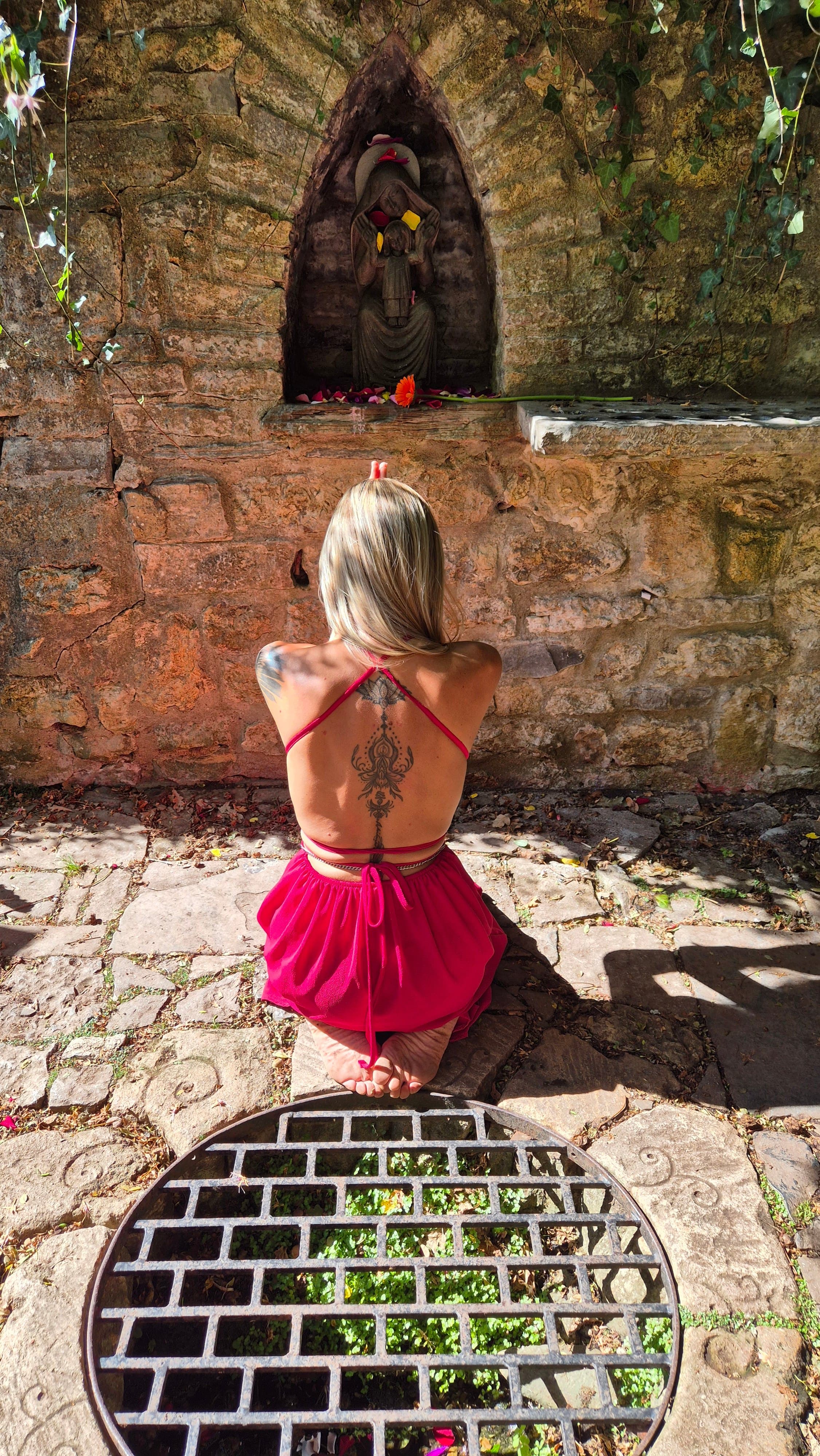
My relationship with Mary Magdalene began through reading about her connection with France and the Rose tradition.
I felt a strong recognition in my body. A sense that her story carried something I had been searching for.
For me, Mary Magdalene represents a form of feminine spirituality that does not reject the body. She represents devotion without disappearance. Love with dignity. Intimacy as a place of truth. The courage to remain present through grief, transformation, and change.
I do not ask others to share my understanding. I allow her presence to inform how I hold ceremony, relationship, and the body.
Isis
The one who gathers what has been scattered.
Within my devotional practice, Isis represents remembrance, integration, and sacred feminine authority.
Her mythology speaks to the gathering of what has been broken apart. The return of wholeness through devotion. The capacity to hold love, grief, power, and transformation in the same body.
I experience her as a symbol of the priestess who does not abandon matter for spirit. She brings the sacred into the body. Into ritual. Into voice. Into touch. Into everyday life.
Sacred Union
Not gender roles. A relationship between qualities.
The feminine and masculine are not presented here as fixed identities. They are qualities that may move through every person.
The feminine may be experienced as receptivity, intuition, feeling, creativity, and the capacity to listen.
The masculine may be experienced as direction, clarity, structure, protection, and conscious action.
Neither is superior. Neither is complete alone.
The Rose Path invites a relationship between them. Softness held by clarity. Feeling supported by structure. Surrender that does not lose choice. Direction that does not become control.
The inner union is not the end of difference. It is the end of war between the parts of us.
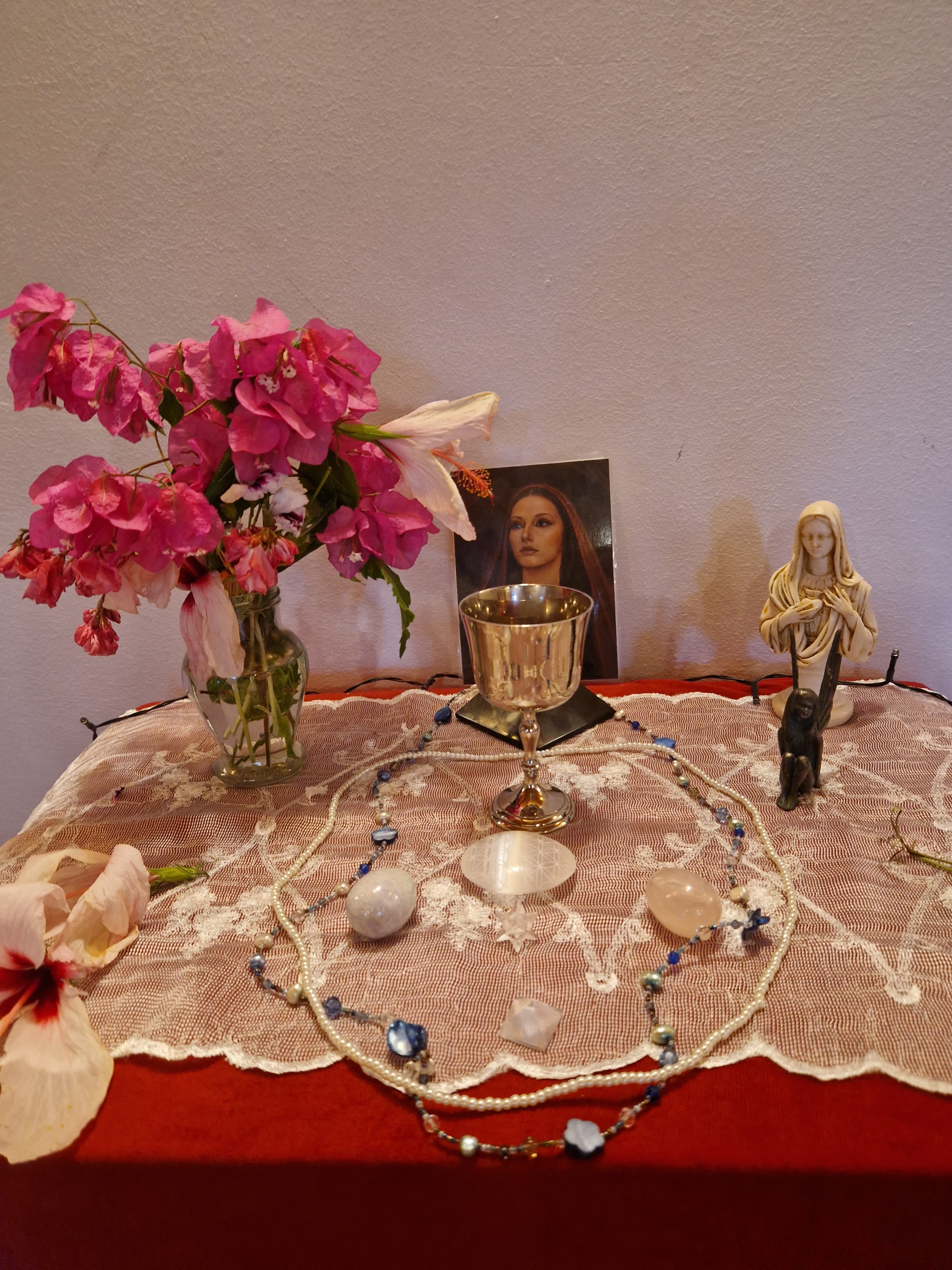
A devotional altar set for the meeting of feminine and masculine.
Embodiment
The sacred must be able to live in the body.
The body is central to this path. Not as an object to perfect. Not as something shameful. Not as a performance for another person.
The body is where we notice truth. Where boundaries become felt. Where desire, grief, fear, pleasure, contraction, and openness can be met with awareness.
To call the body a temple is not to make it pure or perfect. It is to meet it with respect. To listen before acting.
To recognize that spiritual practice has little meaning if it requires us to leave ourselves behind.
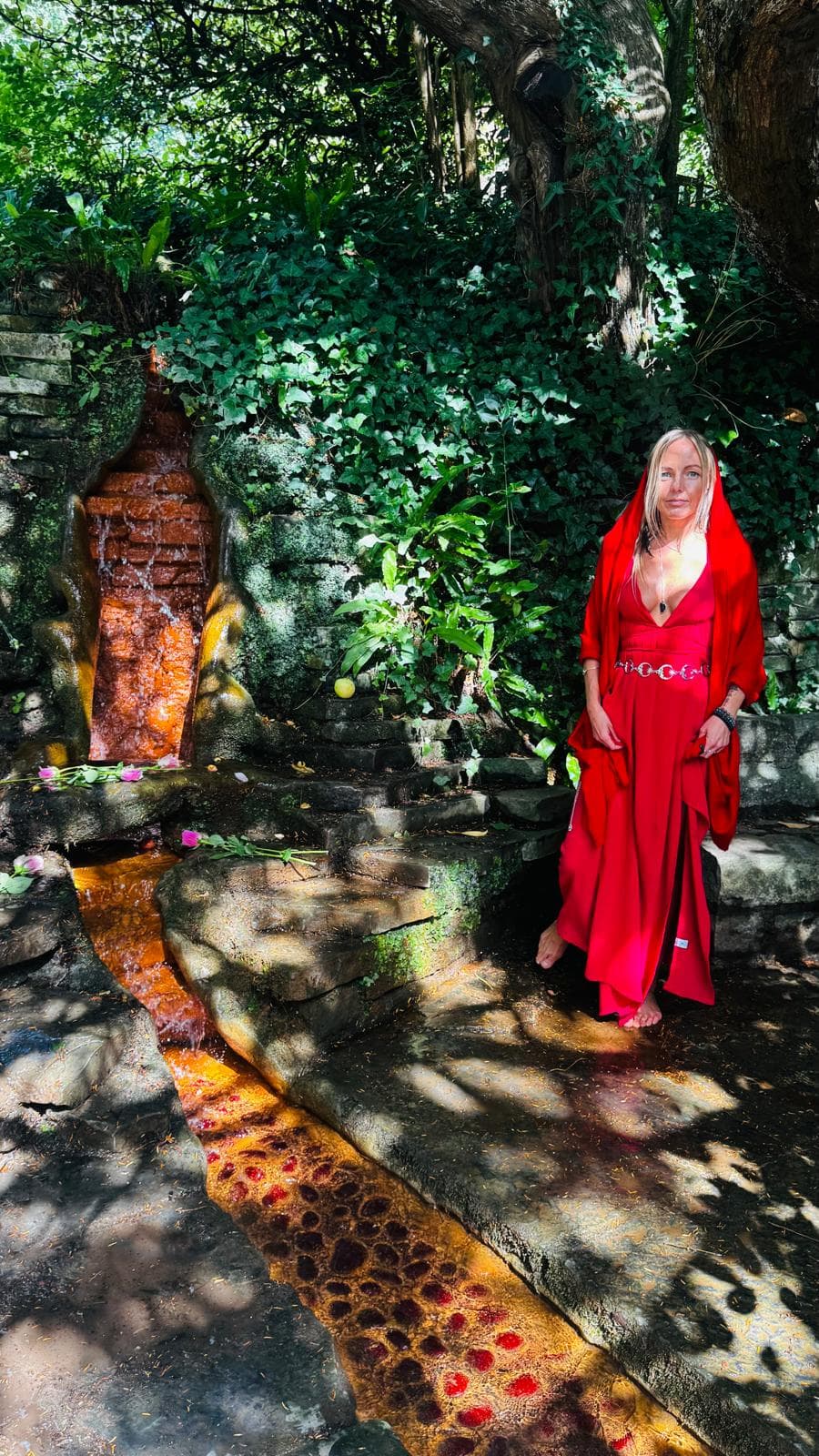
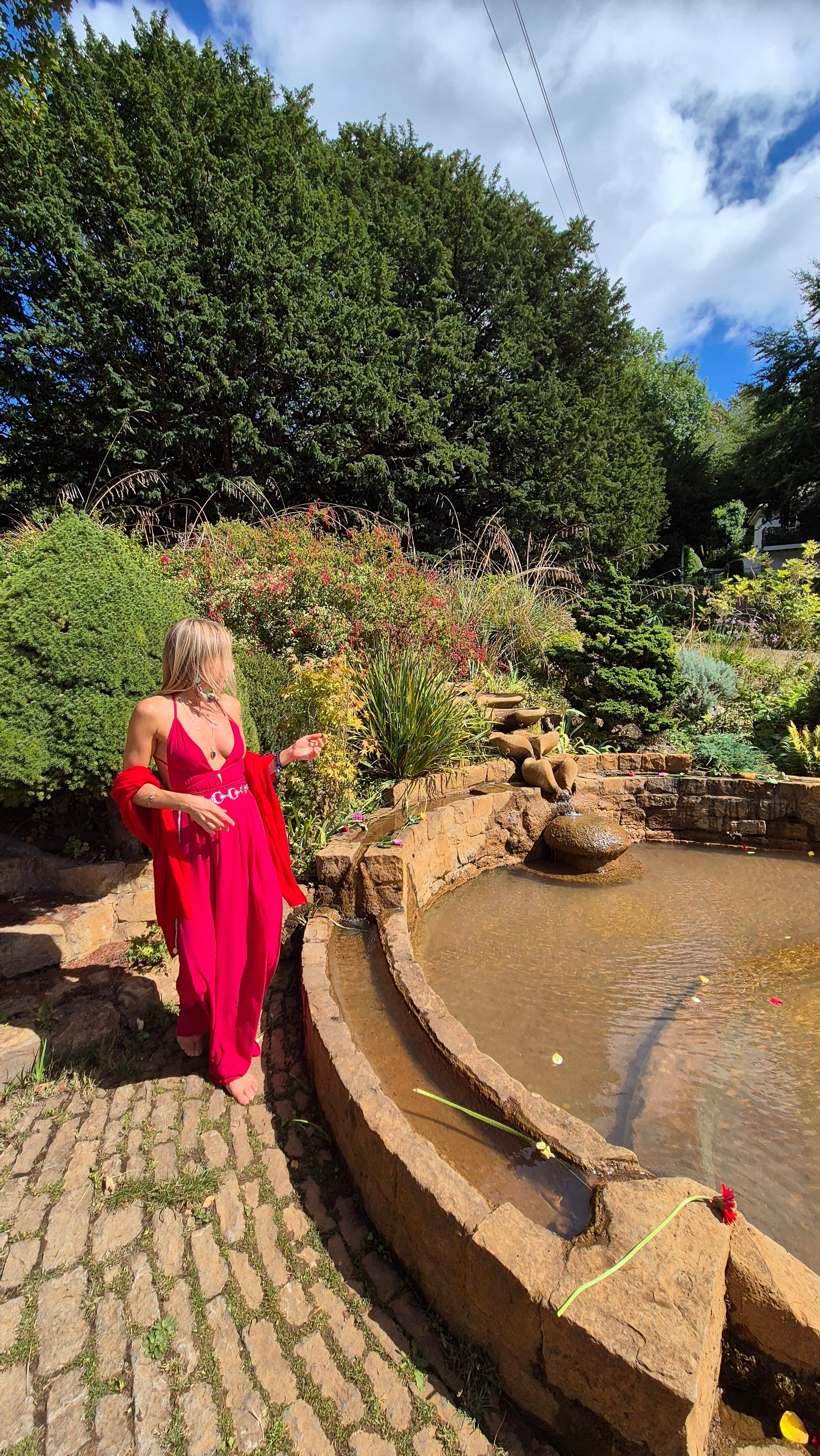
At the sacred waters of Chalice Well, during the Mary Magdalene Retreat, August 2025. A place of remembrance, devotion, and the quiet presence of the Rose.
My Path
The call of the Rose arrived through experience.
My journey with the Rose began when I read about Mary Magdalene and France. My body responded before my mind had language for it.
Soon after, I entered Sacred Tantric Priestess training rooted in Rose teachings. During meditation and ceremony, I began to experience images of priestess work, temples, goddesses, and lives devoted to sacred practice.
I understand these experiences as part of my personal spiritual language. They have shaped me deeply. They are not beliefs I require others to adopt.
Over time, the message I continued to hear was simple: Follow the Path of the Rose.
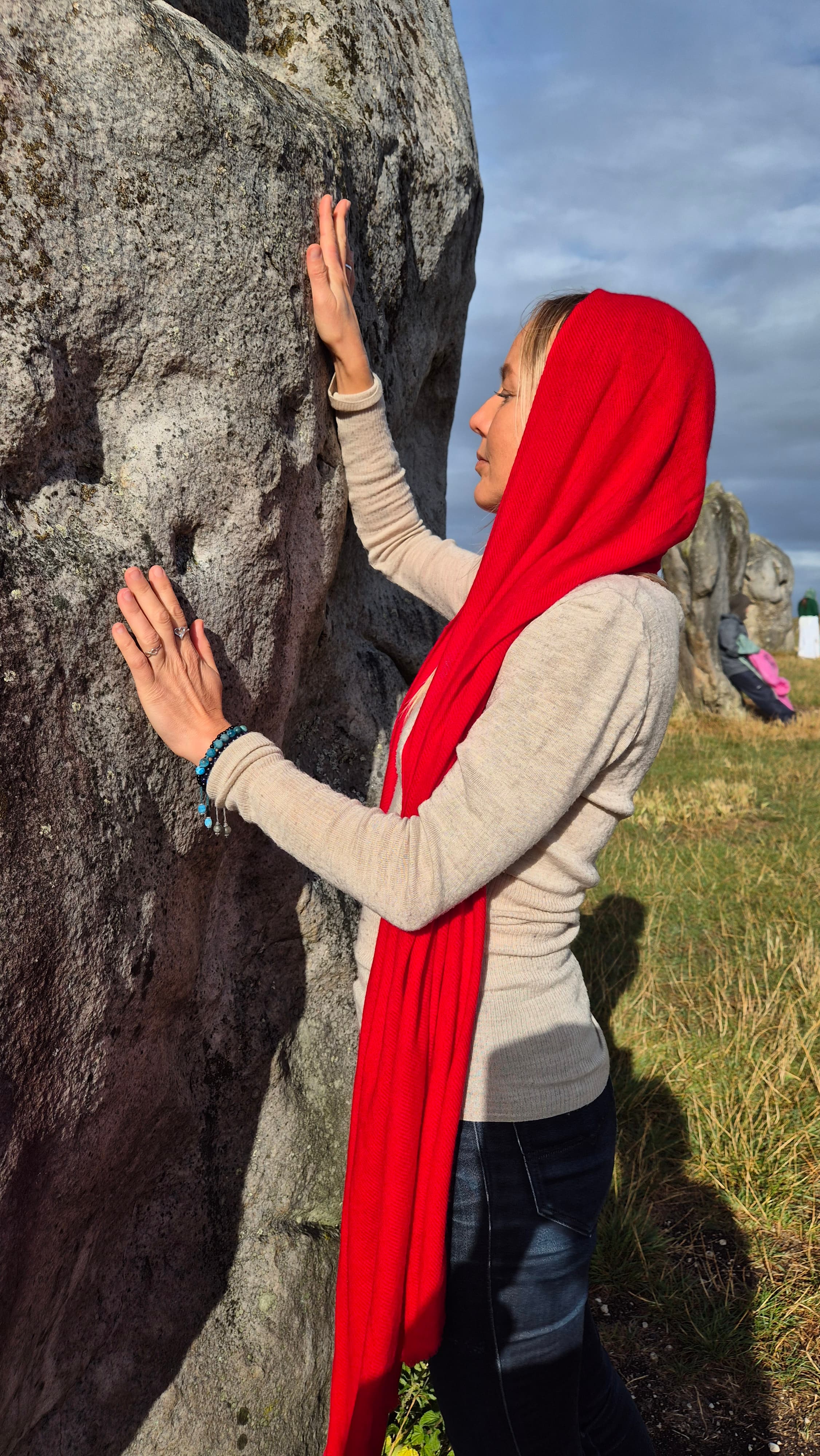
That call led me into retreats and pilgrimages connected with Avebury, Glastonbury, Stonehenge, and Mary Magdalene traditions. It continues to draw me toward France and the landscapes associated with her story.
For me, this path is a devotion to love, embodiment, truth, and the meeting of spirit and flesh.
The Work
How the Rose enters the spaces I hold.
The Rose Path is not only something I speak about.
It shapes how I create space.
Women’s circles
Spaces for embodiment, voice, reflection, boundaries, ritual, and being witnessed without comparison.
Ceremony
Simple, intentional practices that mark transitions, grief, devotion, beginnings, endings, and remembrance.
Embodied practice
Breath, movement, meditation, body awareness, and ways of listening beneath the mind.
Relationship with the feminine
An exploration of softness, anger, desire, creativity, intuition, dignity, and inner authority.
Integration of feminine and masculine
Practices that bring receptivity and direction, tenderness and structure, surrender and boundary into a more conscious relationship.
Women’s Circles
A room for remembering your own voice.
Nothing to perform. Nothing to prove.
The women’s circles are created as intimate spaces for presence, embodiment, ceremony, and honest sharing.
Each gathering may have a different theme. The rhythm is shaped around what the circle is exploring.
- Guided meditation
- Breath
- Embodiment
- Gentle movement
- Voice
- Journaling
- Rose ritual
- Ceremonial cacao
- Reflection
- Boundaries
- Group sharing
- Quiet integration
Format, rhythm, location, and upcoming dates are shared on request.
Softness is not the absence of a boundary.
It is what becomes possible when the boundary is trusted.
The Way I Hold It
Devotion without surrendering sovereignty.
Nothing is imposed
You do not need to share Lina’s spiritual language to participate.
The body remains yours
Consent, choice, and boundaries remain central.
Experience comes before belief
You are invited to notice what is true for you.
Mystery remains grounded
Ceremony and symbolism are held alongside clarity, communication, and care.
Enter
The Rose does not ask you to become someone else.
It invites you to return more fully to yourself.
You may feel called to a circle. To ceremony. To private guidance. Or simply to begin with a question.
There is no pressure to know.
We can begin with a conversation.